




If your Mercedes greets you in the morning sitting noticeably lower at one corner, or it takes longer and longer to rise after you start it, the problem is almost certainly in the Airmatic air suspension. It is easy to misdiagnose, because several very different faults can produce the same symptom. This guide explains what each part does, which one tends to fail, what the dashboard message is telling you, and how to avoid paying for the same repair twice.
| The short version | What it means for you |
|---|---|
| Three usual suspects | Workshop trade press names the compressor relay, the compressor and leaking air springs as the main problem areas. |
| Low at one corner after standing | Points to a leak in that corner’s air spring or its fittings. |
| Slow to rise, then a warning | Can be a worn compressor with no leak at all. |
| Compressor keeps running, hiss from the front | A compressor relay stuck in the “on” position. It can flatten the battery and wear out the compressor. |
| The dash message is a speed limit | Mercedes’ instruction is under 80 km/h, gentle steering, and listen for scraping. |
| Fix the cause, not the casualty | A new relay on a damaged compressor burns out too, and a new compressor on a leaking car is refilling it from day one. |
What Airmatic is, and which Mercedes have it
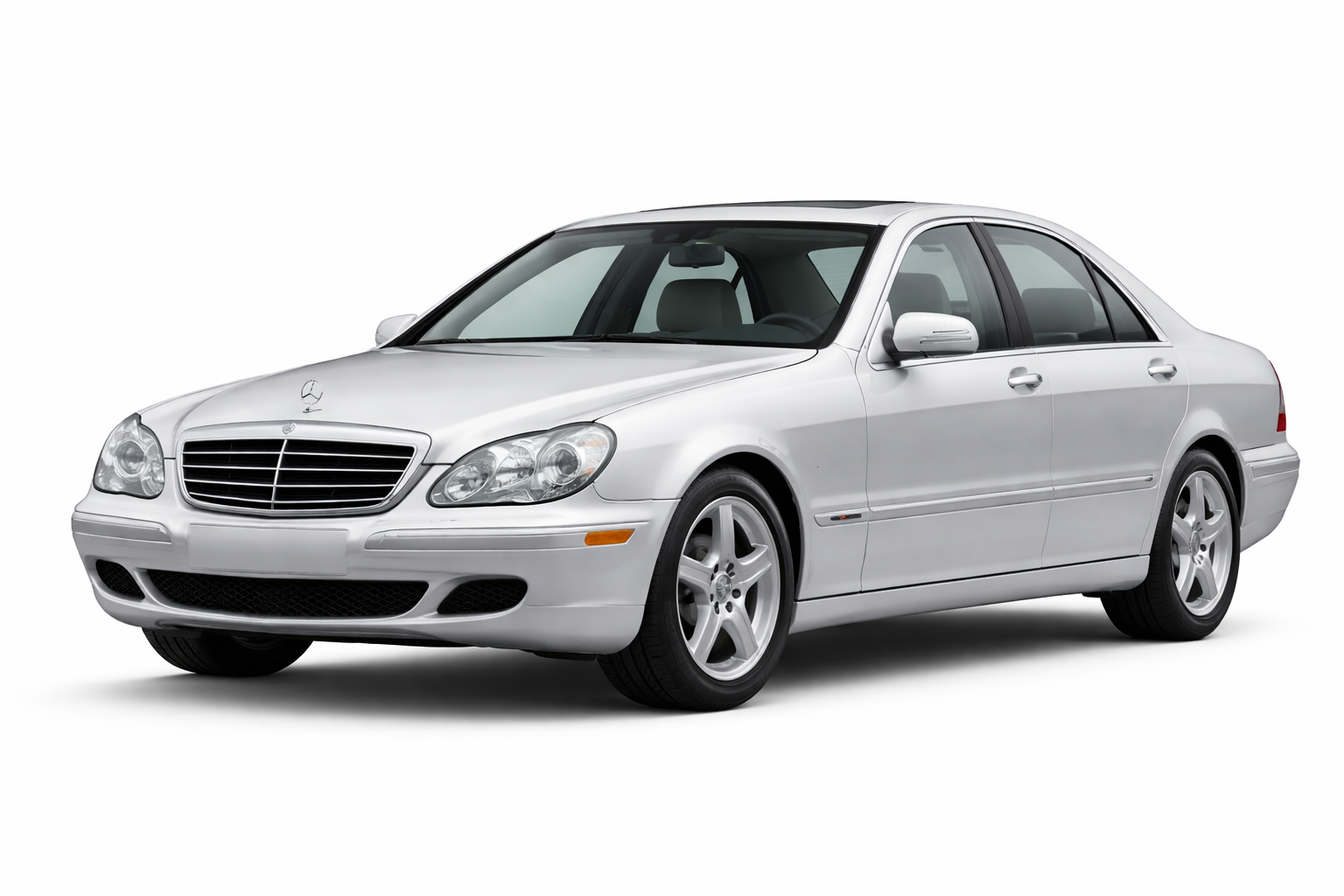
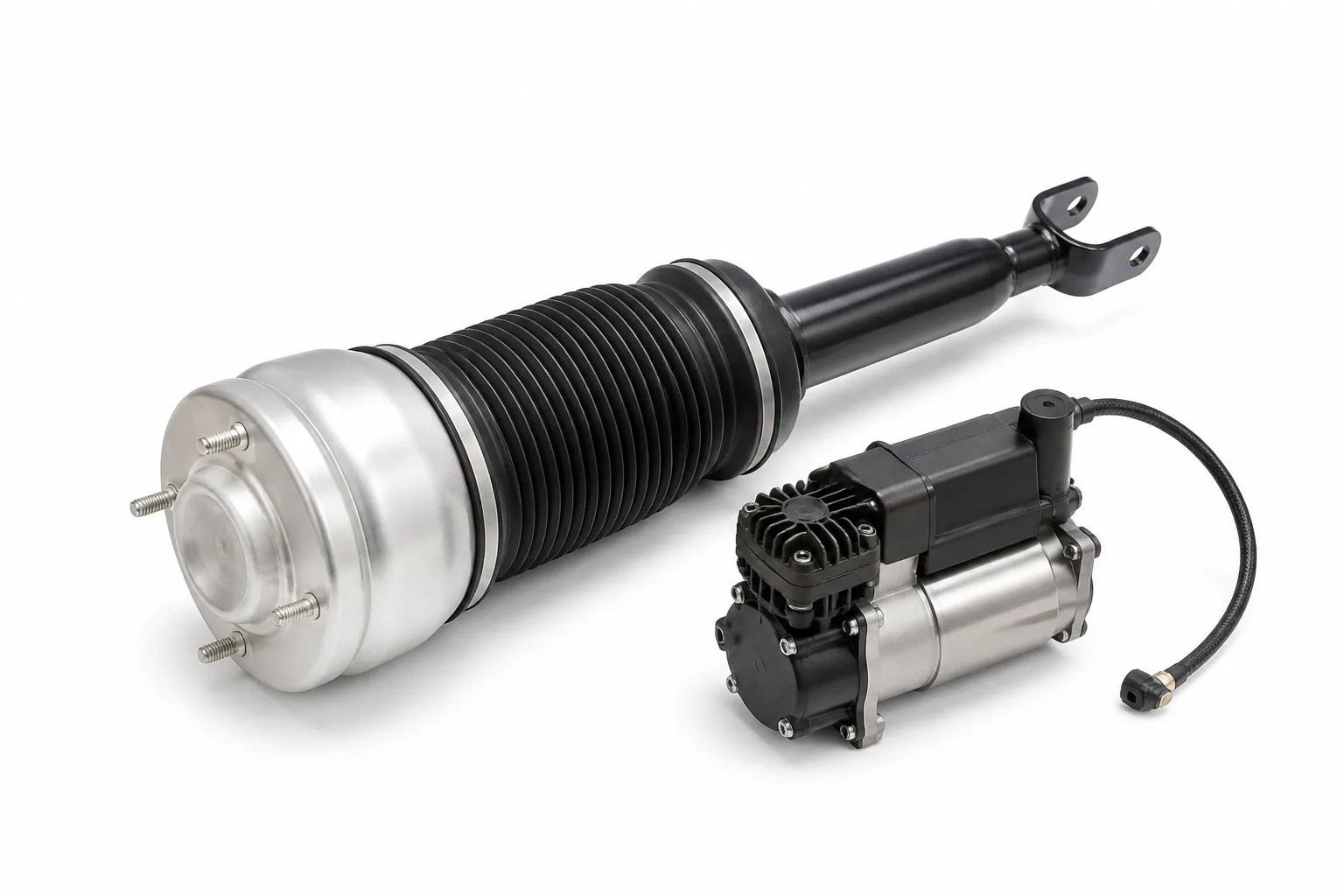
Airmatic replaces the steel coil springs with rubber air springs, one at each wheel. An electric compressor fills them, a valve block sends the air to each corner, and level sensors report the ride height back to the control unit, which keeps the car level whatever it is carrying and lowers it automatically at speed. It first appeared on the W220 S-Class and spread from there to the E-Class and most of the SUVs.
On South African cars, the ones you are most likely to meet with it are:
| Model | Chassis | Airmatic in South Africa |
|---|---|---|
| S-Class | W220 | The car Airmatic launched on |
| S-Class | W221 | Airmatic, or Active Body Control on some versions |
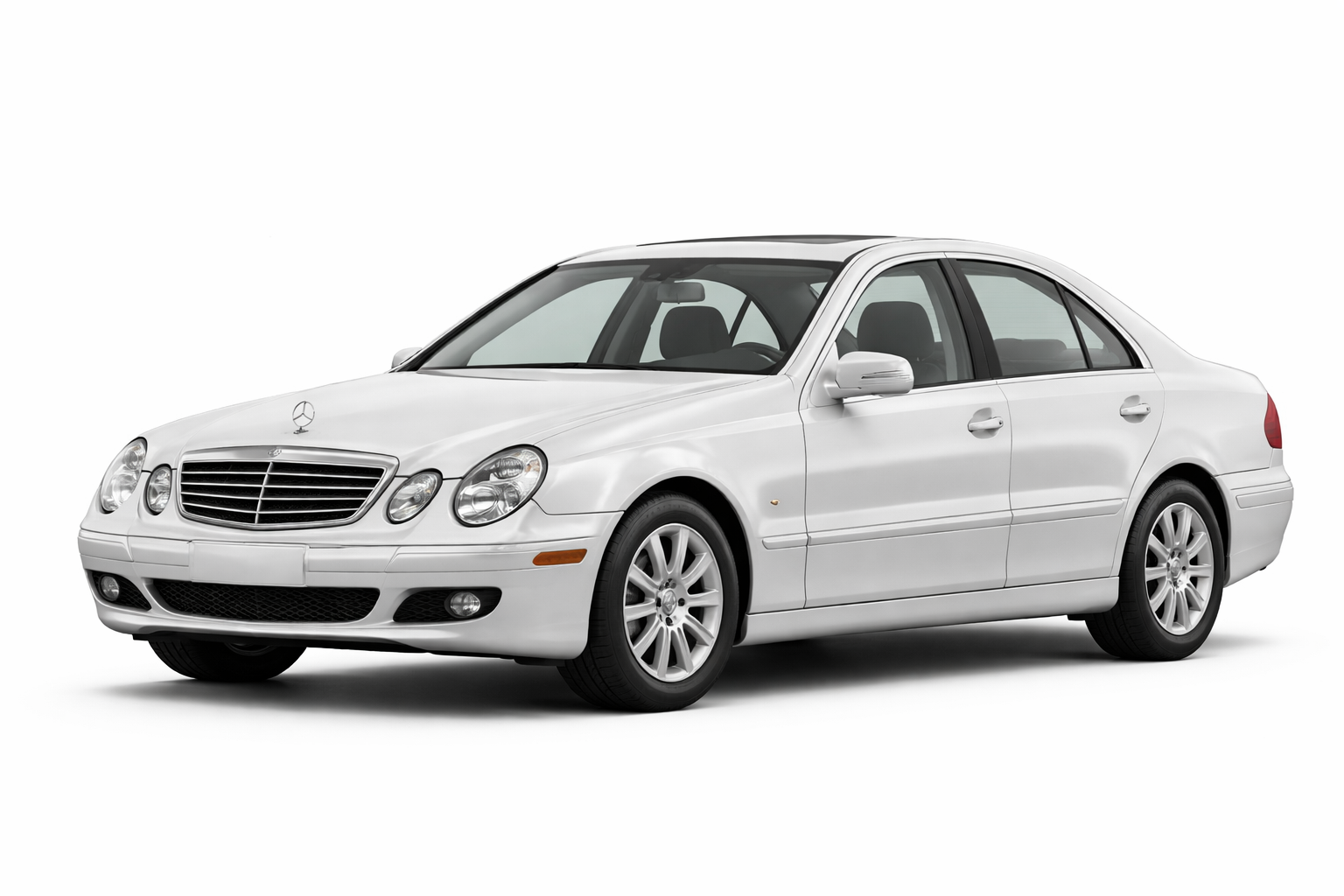
| E-Class | W211 | Standard on the E55 AMG, per CAR Magazine’s local road test |
| M-Class (ML) | W164 | An R15 000 option at the 2005 SA launch, and part of the Off-Road Pro package |
That last line matters if you are shopping for parts for an ML. Because Airmatic was an option, two W164s that look identical can have completely different suspension, one on coil springs and one on air. Check before you buy anything; the VIN settles it.
The parts that fail, and how each one gives itself away
Import-Car, a US trade magazine written for independent workshops, names “three main problem areas for AIRMATIC suspensions”: “relays, compressors and leaking airbags.” The same article notes that most systems “can easily go 120,000 miles” (about 193,000 km) without service or repair, so a failure on a 15-year-old Merc is usually plain wear. Here is what each one looks like from the driver’s seat.
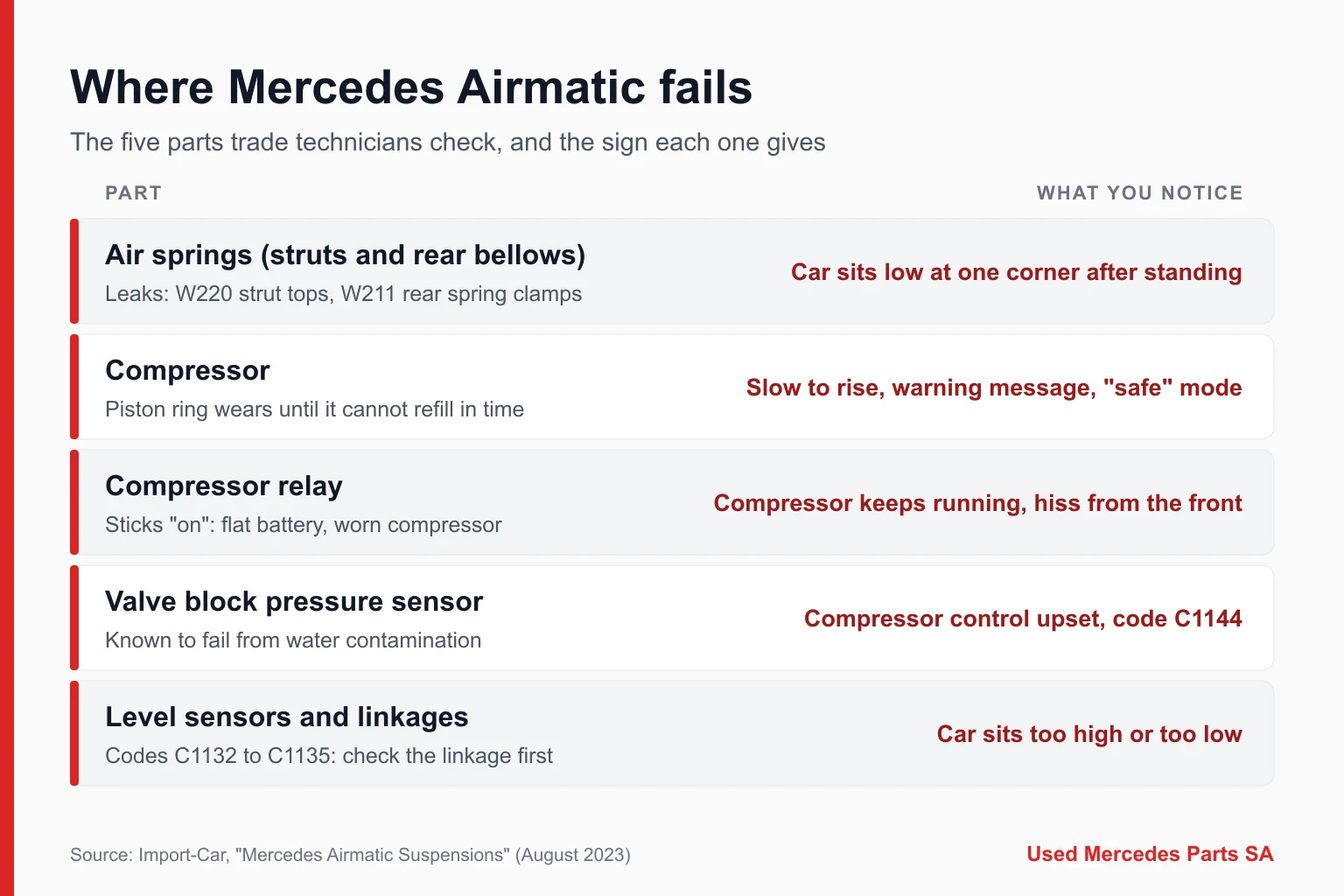
1. Leaking air springs
The air springs are rubber bellows, and rubber ages. The tell is a car that sits low on one corner after it has been parked for a while, then comes back up once the engine is running. Where the leak usually starts depends on the model:
- W220 S-Class: at the tops of the struts. Import-Car describes “the soft rubber material that can be seen through the hole in the top on the strut towers” developing cracks, and warns that owners who have tried sealing it with epoxy found it “may work for only a short amount of time.”
- W211 E-Class: the 2003-2009 car “is known for having leaking rear springs,” with leaks typically “where the clamps hold the springs to the upper and lower caps.” Replacing them is a bigger job than the part suggests: the rear sub-frame has to be lowered, which means removing the exhaust, the prop shaft and parking brake components.
A leaking spring is worth fixing quickly for a reason that has nothing to do with ride comfort. Every time the car settles, the compressor has to put the air back, and run time is exactly what wears a compressor out, as the next section explains.
2. A tired compressor
Mercedes typically mounts the compressor behind the front bumper, and Import-Car notes that “it is not uncommon for the compressor to fail long before the airbags start to leak.” Its piston is sealed by a ring that runs without lubrication and is designed to wear. Eventually the compressor cannot refill the system fast enough, the dash shows a warning and the suspension drops into a “safe” mode to limit how long the compressor runs.
The important line, for anyone about to buy a pair of air struts: that warning “is not an indication that there is a leak in the system.” A slow, tired compressor and a leak can look the same from the driver’s seat, which is exactly why they need to be told apart before money is spent. The question that separates them is whether the car actually drops while parked. If it does not, a replacement air strut may not be what your car needs.
3. A compressor relay stuck on
This is a small part that can do a lot of collateral damage. The relay switches the compressor on and off, and according to Import-Car it “has a bad habit of getting stuck in the ‘on’ position.” The compressor then keeps running, with the surplus pressure forced out through a bypass valve and exhaust hose, so you may hear the compressor running and a hissing noise from the front of the car. Left alone, it can flatten the battery, damage the relay and wear out the compressor.
The relay and the compressor’s high-current fuse are among the first things a technician checks on a car whose Airmatic is dead or keeps leaving it on the bump stops. Mercedes’ own bulletin for newer Airmatic cars (the W213 E-Class, W205 C-Class and 253-series GLC) treats the three as one job: where the compressor is not working and its 40A fuse may have blown, the remedy is to “Replace compressor, fuse, and relay.” In that bulletin the cause is moisture freezing inside the compressor, so it is a reminder of how closely the three parts are linked rather than a fault you should expect on an older car.
Car Sitting Low? Get Airmatic Parts Priced.
Tell us which corner drops, whether it comes back up when the engine starts, and whether the compressor keeps running. We will price the right used or aftermarket part for your S-Class, E-Class or ML, matched to your VIN.
4. The valve block and its pressure sensor
The valve block sits next to the compressor and contains the solenoids that send air to each corner. The block itself is not serviceable, but the pressure sensor on its end can be replaced, and Import-Car says it “has been known to fail due to water contamination.” Because that sensor controls when the compressor runs, a faulty one upsets the whole system; the article ties it to fault code C1144. Mercedes’ newer-model bulletin makes the same point about moisture from the other side: if there is water in the pressure line between the compressor and the valve block, it “can be assumed that there is also moisture in the AIRMATIC valve block,” and the valve unit is replaced.
5. Level sensors and their linkages
Most Airmatic cars use three or four level sensors, each connected to the suspension by a small linkage. When one misreads, the car may level itself to the bad reading and sit too high or too low. Import-Car lists fault codes C1132 to C1135 for these sensors, and its advice when one appears is to “first check the linkages for the sensors.”
What the warning messages actually mean
The W221 S-Class owner’s manual spells out the Airmatic messages, and they are worth knowing before one appears on a highway:
| Message | What Mercedes says it means | What to do |
|---|---|---|
| Vehicle Rising Please Wait | The car is too low while standing still | Do not pull away until the message clears |
| STOP Car Too Low | You pulled away before the car had risen | Pull over safely and wait for the message to clear |
| AIRMATIC Malfunction | Airmatic is defective or restricted | Under 80 km/h, small steering movements only, listen for scraping, raise the car if it will, get it to a workshop |
The steering advice is the easiest one to forget. The manual’s reason for it is blunt: “the front fender or the tires could be damaged if the steering movement is too large.” Some S-Class versions use Active Body Control, a hydraulic system, instead of Airmatic; their messages begin with “ABC” and are a different problem altogether.
Fix the cause, not just the part that died
The easy way to pay twice is to replace the part that failed and leave the cause on the car.
- A new compressor on a car with a leak has to keep refilling the system from day one. Find and fix the leak first.
- A new relay on a damaged compressor will burn out too. Import-Car’s advice is to watch the compressor’s current draw after replacing the fuse and relay: a brief surge at start-up is normal, but if it stays high “it could be a sign of mechanical damage to the pump. It will also burn up the new relay and fuse.”
- A new air spring with a stuck relay still leaves you with a flat battery and a compressor running itself to death.
So the diagnosis should start with the simple checks, the fuse, the relay and the sensor linkages, before anyone orders a compressor or a pair of struts. Some owners facing all four corners at once choose a coil-spring conversion instead; Import-Car notes the kits cost less than replacing all four air springs, but they need an electronic bypass module so the dashboard does not light up, and you lose the ride the car was bought for.
Not Sure Which Part Has Gone? Send Us The Symptoms.
Give us the model, year and VIN plus what the car does: which corner drops, how fast, and what the dash says. We will match the strut, compressor, relay or valve block to your exact build before anything is quoted.
Frequently asked questions
Can I drive a Mercedes with the Airmatic warning on? Carefully, and only to get it fixed. Mercedes’ instruction for the malfunction message is to stay under 80 km/h, make only small steering movements and listen for scraping, because Mercedes warns that large steering movements can damage the front wings or tyres.
Why does my Mercedes sink overnight but come back up when I start it? The compressor does not run while the car is switched off, so a slow leak shows up as a corner that has settled by morning. When you start the car the compressor refills it. That pattern points at the air spring or its fittings on the low corner rather than at the compressor.
Does every W164 ML have Airmatic? No. At the 2005 South African launch it was a R15 000 option, and also part of the Off-Road Pro package, so plenty of MLs run on coil springs. Check the car, or its VIN, before ordering air suspension parts.
Is a coil-spring conversion a good idea? It can make sense when all four corners are worn out, but it needs a bypass module to keep the warning lights off, and it gives up the self-levelling ride. If only one corner or the compressor has failed, replacing that part is a much smaller job.